
The Protein Myth
Protein has been misunderstood—which is a problem that can lead to dangerous results.

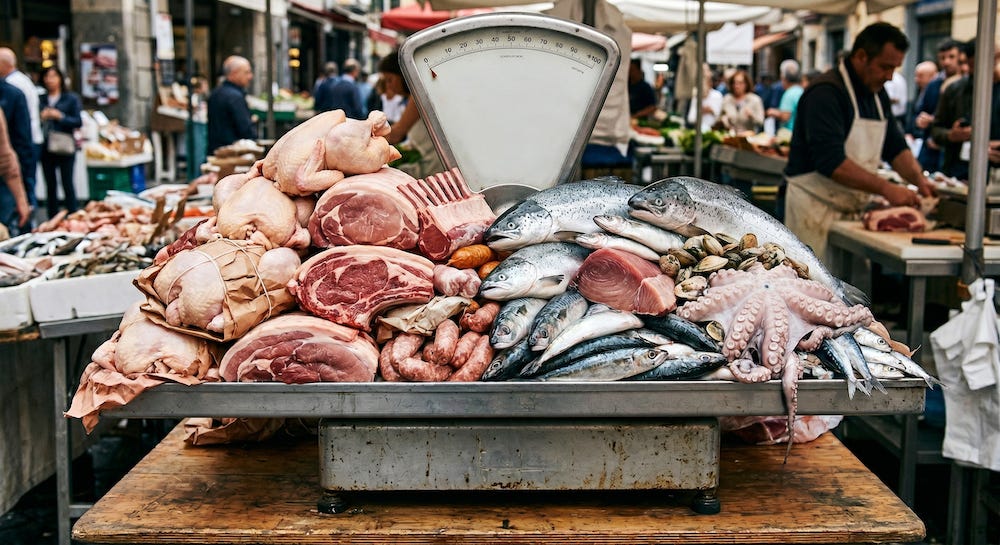
One of the most maddening things about the government’s new Dietary Guidelines— which the physician David Katz unpacked for us earlier this year—is the increased emphasis on animal proteins. The confusion and fallout about this extreme recommendation brought me back to the following discussion from my 2013 book, VB6: Eat Vegan Before 6:00. Dubbed “The Protein Myth,” the section compares plant-based versus animal-based protein, and uses nutritional and consumption data to make a case for replacing at least some of the latter with the former.
Today we’re eating even more animal protein than we did then, when I advocated that we tip our diets more towards fruits and vegetables and away from meats, poultry, fish, dairy, and eggs: Americans eat an average of 226 pounds of red meat and poultry and about 22 dozen eggs a year. Fruit and vegetable consumption is already down a bit over the last few years; projections for 2026 add another pound of meat and a dozen more eggs.
The new Dietary Guidelines have nearly doubled the serving goals from when I wrote the book to “1.2–1.6 grams protein per kilogram of body weight per day, adjusting as needed based on your individual caloric requirements.” By my math, calculating how that would translate into lean chicken or beef (these cuts generally contain about 20% protein by weight), a 160-pound person should eat between 15.5 and 20.5 ounces of animal foods a day. That’s 1 to 1 1/4 pounds or two-to-three large boneless, skinless chicken breasts or trimmed sirloin steaks, with encouragement for larger people to eat even more. Every day. The trend toward pumping even more protein to the American diet is disheartening to say the least and simply unsustainable. – MB
Like carbohydrates and fats, protein is found in almost every part of your body. It’s used for maintenance and repair, particularly in muscles, bones, skin, and hair, but also in blood and organ tissue. It’s also needed to keep many chemical reactions running smoothly, including the all-important part of your blood that carries oxygen around. But unlike carbohydrates and fats, you don’t consume whole protein directly and it isn’t stored in the body in any form.
Instead, the body manufactures protein—more than 10,000 different types—by stringing together amino acids. Your body manufactures some amino acids, but around twenty are called “essential” because your body cannot produce them; you must get these from food. So you’ve got to eat protein almost daily in order to live. That’s undeniable.
That doesn’t mean you need as much as most Americans get, and I call this section “The Protein Myth” because for decades we’ve been encouraged to eat way more protein than we need—and we’re eating more every year.
