
Picking the Colonizers’ Vegetable
The love and labor behind your Brussels sprouts.

A mutual friend introduced me to David Bacon; though our paths have crossed many times, we’d never met. David is a California-based writer and photographer, who was a factory worker and union organizer for two decades with the United Farm Workers and other unions. Today he documents the changing conditions in the workforce, the impact of the global economy, war and migration, and the struggle for human rights. This work has led to the publication of several books about migration. One of them, In the Fields of the North / En los Campos del Norte, documents the lives of farm workers in photographs and oral histories like the photo essay we ran in April, ”Consider the Broccolini—And the Farmworkers Who Harvest It." That essay resonated with so many of you—yay—that we reached out to David to see if we could run another. And here it is.
We are making this piece free for everyone, because we love how much many of you have expressed interest in farming and labor. If you’d like to support our work, we’d love it if you’d become a paid subscriber, either through our site (which has a full recipe database; use code 100DAYS40 for 40% off an annual membership) or here on Substack. – Mark
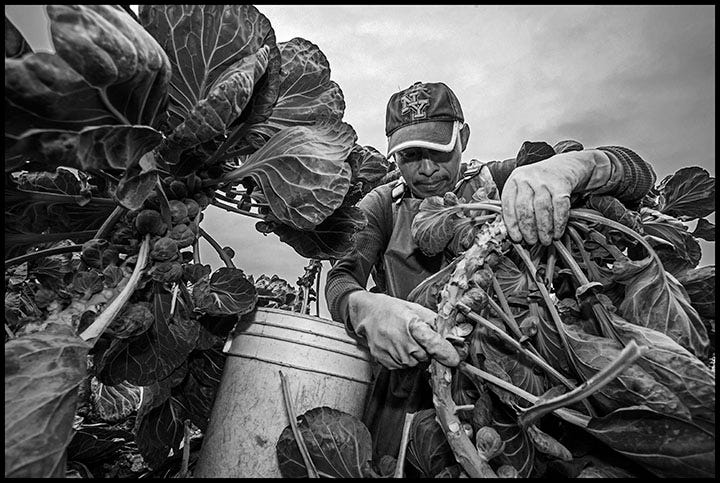
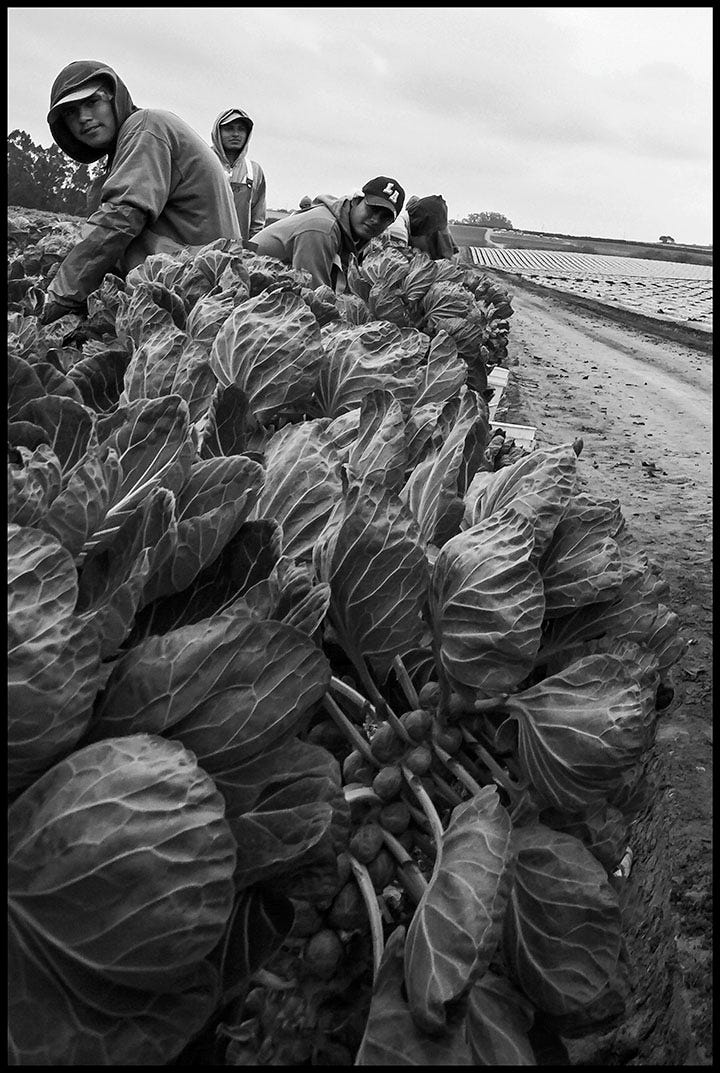
On a cold November day, a crew of Mexican migrant workers were picking Brussels sprouts on a ranch outside of Watsonville. One picker would embrace the top of each long stem, pulling it close to his chest, while his hands ran down the stalk, pulling the sprouts loose where they'd land neatly into his bucket. Others used different techniques. Often a worker would grab the plant at the bottom, where its leaves were as big as faces, and then simply yank the sprouts off.
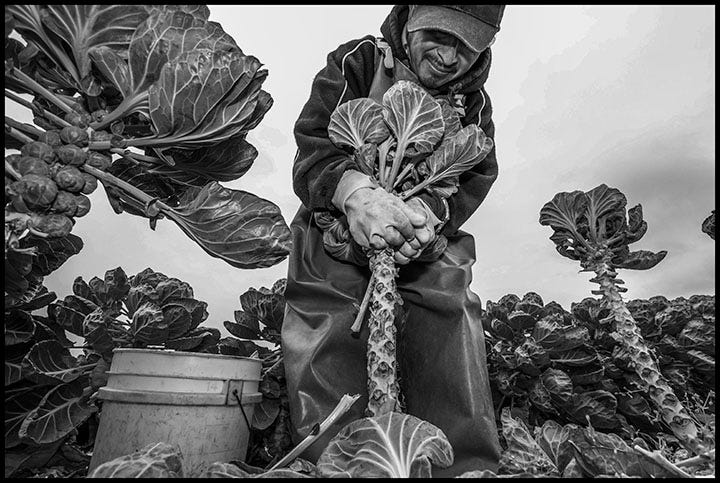
Much of farm work is paid by the piece, ensuring that workers produce at an often demonic pace. Workers in this field, however, were paid by the hour. As arduous as their labor was, they could work with a certain dignity.
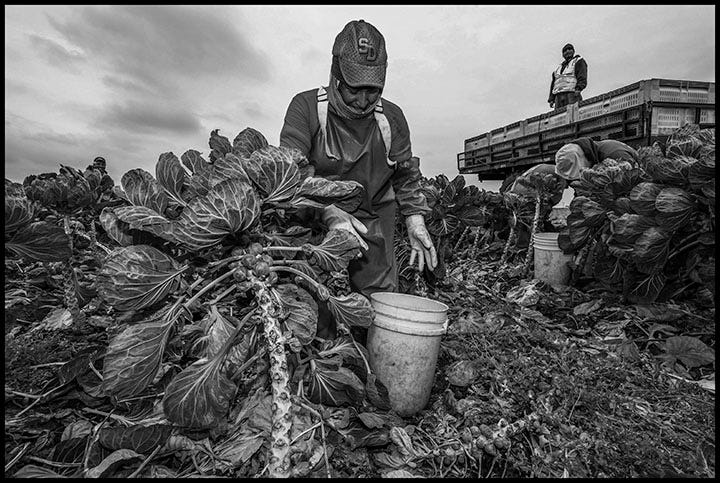
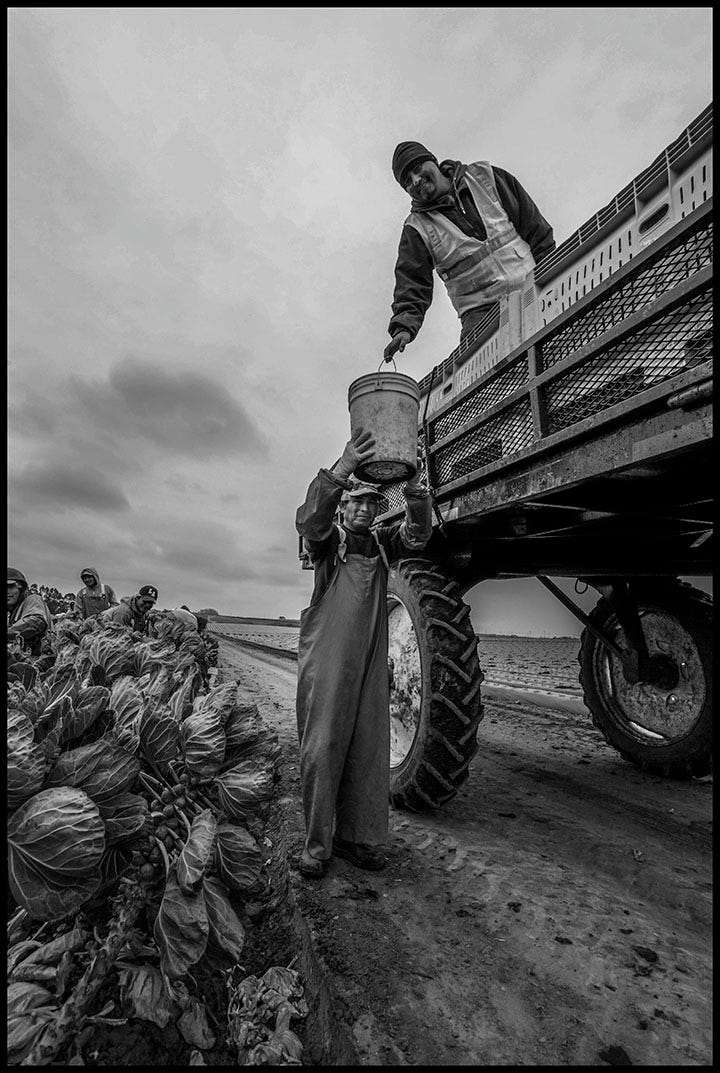
Once each bucket was full, the picker carried it to a trailer, handing it off to the loader, who'd toss the small green heads into big white bins. Much of farm work is paid by the piece, ensuring that workers produce at an often demonic pace. Workers in this field, however, were paid by the hour. As arduous as their labor was, they could work with a certain dignity. They walked to the truck to empty their buckets, instead of running.
In the Ohlone Elementary School across the road from the field, Jenny Dowd, a bilingual teacher, led her unruly class of 8 and 9 year olds in a song to help them learn to read. Her kids were the children of farmworkers, some perhaps of the men cutting the Brussels sprouts nearby.
Al Roker and Courtney Roker Laga are this week’s guests on Food with Mark Bittman. Listen here!
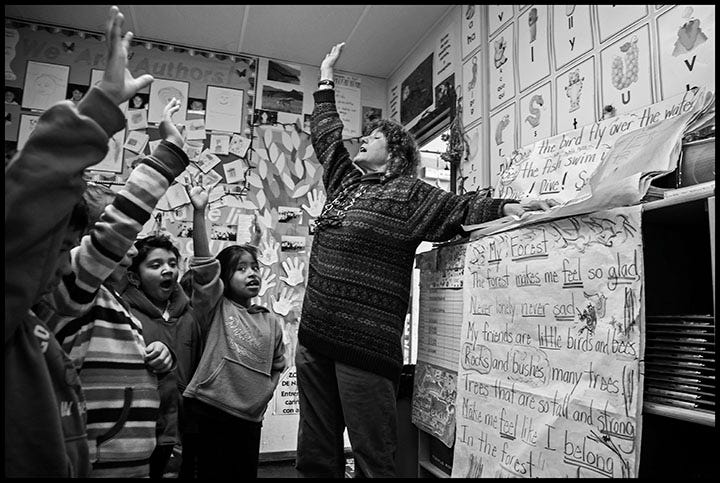
Teacher Jenny Dowd helps students, many of them from Mixtec families, learn the words to a song at Ohlone Elementary School.
The California coast, from Davenport south through Santa Cruz, Watsonville, and Castroville, is Brussels sprouts country. Most of this vegetable in North America comes from these fields, although a growing harvest now takes place in Baja California, in northern Mexico. In California the vast majority of the people who harvest Brussels sprouts, like those who pick other crops, are Mexican. Most are migrants from the states of southern Mexico—immigrant workers who’ve crossed the border to labor in these fields.
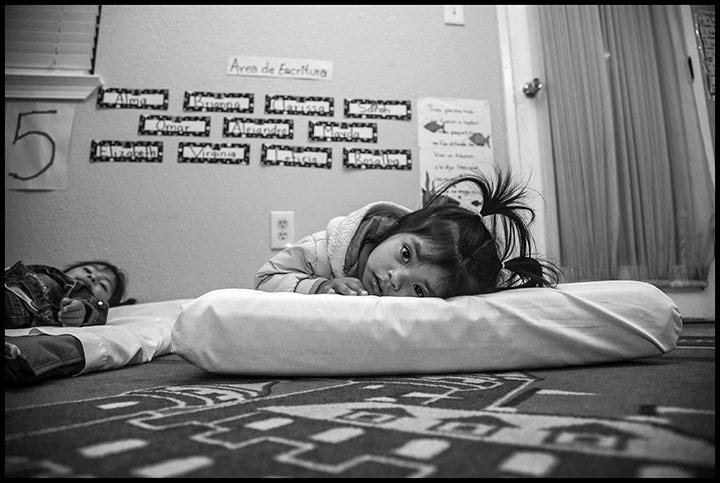
Indigenous migrants have created communities all along the northern road from Mexico to the US and Canada. Their experience defies common preconceptions about immigrants. US policy treats migrants as individuals, ignoring the social pressures forcing whole communities to move, and the networks of families and hometowns that sustain them on their journeys.
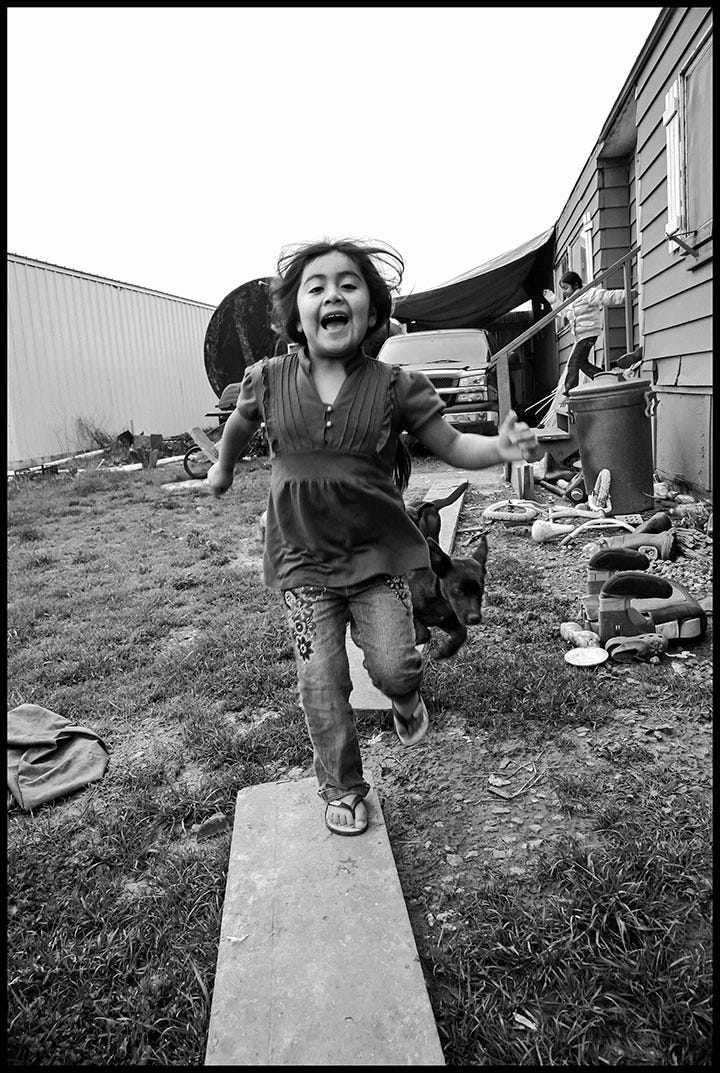
In the current wave of deportations, parents without papers often have to leave behind their children born in the US, like the children in the Ohlone Elementary School. Sometimes this arbitrary Alice-in-Wonderland world does just the opposite, deporting undocumented young people who have no memory of the place they were born, but to which they find themselves forcibly relocated.
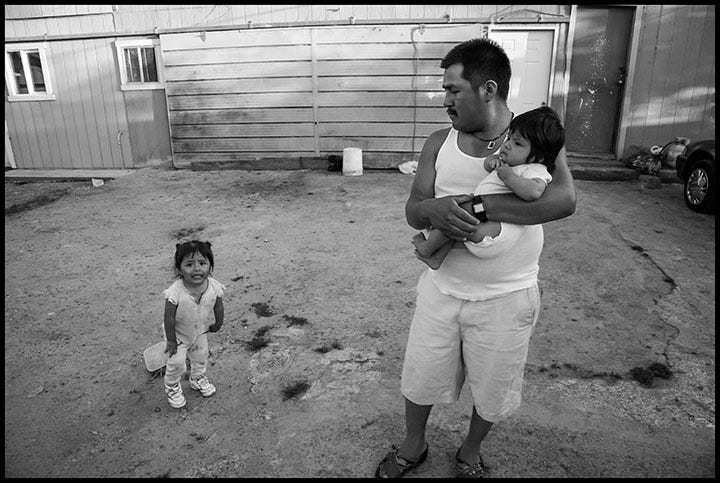
"The seasonal nature of farm work, the racism justifying exploitation, and the lack of social investment in in rural communities conspire to built obstacles almost impossible to overcome."
Without the labor of these families, there would be no Brussels sprouts on the table, but it is not labor that guarantees a good life. Gaspar Rivera-Salgado, a Mixtec professor at UCLA, points out, "A job in the fields in California, Oregon, or Washington is not a guarantee for escape from a precarious life. Migrating north is no longer a means to achieve economic mobility, if it ever was. At least for this generation, it is hard to imagine any exit. The seasonal nature of farm work, the racism justifying exploitation, and the lack of social investment in in rural communities conspire to built obstacles almost impossible to overcome."
Today the people picking in this field may be immigrants to the U.S., but in a longer historical view, they are the descendants of Indigenous people whose presence in north America predated Columbus and the arrival of the Brussels sprouts by thousands of years. Now they cross the border between Mexico and the U.S. as migrant workers, many speaking Indigenous languages as old, or even older, than those of the colonizers—Mixtec, Triqui, or Nahuatl. In the soft conversations among the workers of this picking crew, you can hear those languages mixed with that of the Spaniards.
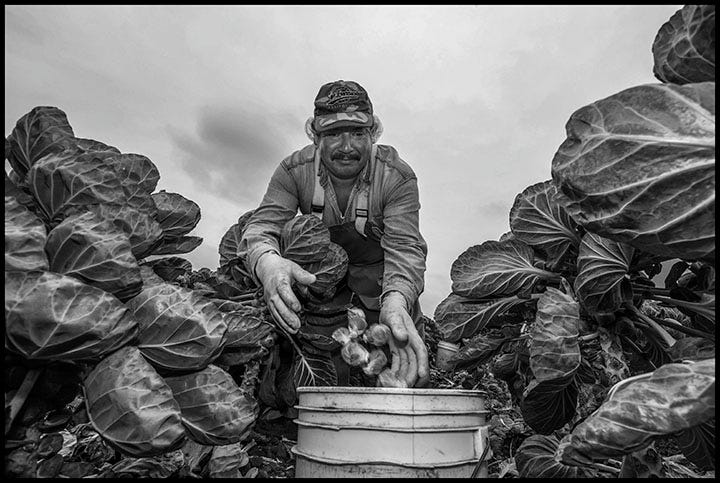
Many people love Brussels sprouts, and serve it for dinner on the U.S. Thanksgiving holiday. Native people in the U.S. point out that Thanksgiving celebrates the beginning of the European colonization of north America, which drove them from the lands where they lived historically. The Brussels sprouts came with the colonizers. While the Romans probably grew and ate them, the first plants came to this continent with the French to the colonies of Quebec and the Atlantic seaboard.
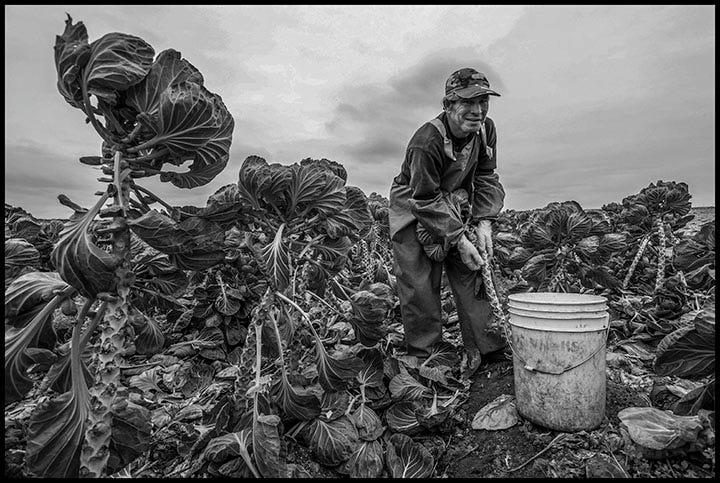
Brussels sprouts may be a colonizers’ vegetable, but it has many healthy properties. It contains sulforaphane and indole-3-carbinol, both of which are believed to play a role in blocking the growth of cancer. In yet another irony, in non-organic fields, picking crews often get exposed to the agricultural chemicals that are one important cause of the explosion of cancer in the U.S. Farm workers get much higher doses than the supermarket patrons who buy the produce they pick.
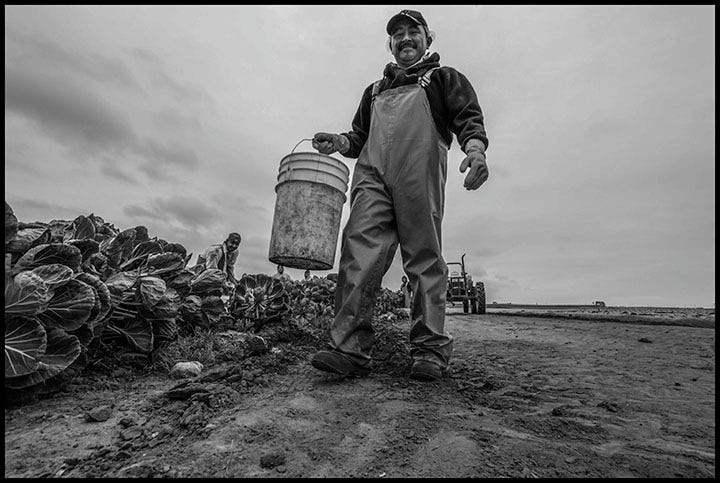
Putting the food on the table is really one of the most important jobs people do, and one that gets the least acknowledgement and respect.
But it’s a job. Putting the food on the table is really one of the most important jobs people do, and one that gets the least acknowledgement and respect. So the next time you decide on Brussels sprouts for dinner, first, don’t boil them. It removes those healthy anti-cancer chemicals. And don’t overcook them either—that’s what produces the sulfur taste many people don’t like. But then, when they’re out there on the table, remember who got them there.
 | A guest post by
|